



Eid al-Fitr 2026: date, prayer and sunnah
A journey between Al-Madinah al-Munawwarah and the rest of the world
Everything you need to know about Eid al-Fitr
Eid al-Fitr marks the end of the blessed month of Ramadan and is one of the most important celebrations for Muslims around the world.
Click on the buttons below if you would like to navigate the page more easily.
When will Eid al-Fitr take place in 2026?
The date of Eid depends on the sighting of the crescent moon that announces the beginning of the month of Shawwal.
According to current astronomical calculations, Eid al-Fitr 2026 is expected to fall between March 19 and March 21, 2026, inshaAllah, depending on the region of the world.
The exact date will be confirmed on the Night of Doubt, when the crescent moon is observed.
Two situations are possible depending on the country.
The interactive table below allows you to select your region of the world and your country to see the estimated date of Eid al-Fitr according to local crescent moon observations.
What time is the Eid prayer?
The Eid prayer is performed in the morning after sunrise.
Generally, it takes place about 15 to 30 minutes after sunrise, depending on the mosque and the city.
In some mosques, the prayer may be organized a little later in order to allow as many worshippers as possible to attend.
It is recommended to check the exact time with your local mosque or Islamic center.
How to perform the Eid prayer (Ṣalāt al-ʿĪd)
The Eid prayer is performed on the morning of Eid, after sunrise and before the Ẓuhr prayer.
It is usually performed in congregation in mosques or in large open prayer areas.
It consists of two units of prayer (rakʿah).
First rakʿah
The imam begins with the opening takbīr.
Then he pronounces:
seven additional takbīr
After each takbīr, the worshippers may glorify Allah.
Then the imam recites:
Surah Al-Fātiḥah
After that he usually recites one of the following surahs:
Surah Al-Aʿlā (87)
or
Surah Qāf (50)
These recitations are reported in the Sunnah of the Prophet Muḥammad, peace and blessings of Allah be upon him.
The prayer then continues normally: bowing, prostrations, and then the congregation stands up for the second rakʿah.
Second rakʿah
After standing up for the second unit of prayer, the imam pronounces:
five additional takbīr
Then he recites:
Surah Al-Fātiḥah
After that he usually recites:
Surah Al-Ghāshiyah (88)
or
Surah Al-Qamar (54)
The prayer then ends like the other prayers.
The Eid sermon
After the prayer, the imam delivers a sermon (khutbah).
He reminds the community of the teachings related to Eid, gratitude toward Allah, and important rulings such as Zakat al-Fitr.
Unlike the Friday prayer, the sermon is delivered after the prayer.
It is reported in an authentic hadith:
The Prophet Muḥammad, peace and blessings of Allah be upon him, went out on the day of Eid al-Fitr and Eid al-Adha to the prayer place. The first thing he began with was the prayer. Then after finishing it, he stood facing the people while they were seated in their rows. He admonished them, gave them advice, and instructed them regarding certain matters.
— Reported by Al-Bukhari and Muslim
The Eid takbīr
On the night before Eid and on the morning of the celebration, Muslims increase their recitation of the takbīr.
اللَّهُ أَكْبَرُ اللَّهُ أَكْبَرُ
لَا إِلَهَ إِلَّا اللَّهُ
اللَّهُ أَكْبَرُ اللَّهُ أَكْبَرُ
وَلِلَّهِ الْحَمْدُ
Allāhu akbar Allāhu akbar
lā ilāha illā Allāh
Allāhu akbar Allāhu akbar
wa liLlāhi al-ḥamd
Glory be to Allah abundantly.
Praise be to Allah abundantly.
And glory be to Allah morning and evening.
Supplications on the way to the prayer
It is recommended to increase the glorification of Allah while going to the prayer.
Among the well-known phrases:
Arabic:
الله أكبر، الله أكبر، الله أكبر، لا إله إلا الله، الله أكبر، الله أكبر، ولله الحمد.
الله أكبر كبيراً، والحمد لله كثيراً، وسبحان الله بكرة وأصيلاً.
لا إله إلا الله وحده، صدق وعده، ونصر عبده، وأعز جنده وهزم الأحزاب وحده.
لا إله إلا الله ولا نعبد إلا إياه مخلصين له الدين ولو كره الكافرون.
---
Transliteration:
Allāhu Akbaru, Allāhu Akbaru, Allāhu Akbar.
Lā ilāha illā-llāh.
Allāhu Akbaru, Allāhu Akbar, wa lillāhi-l-ḥamd.
Allāhu Akbaru kabīran, wa-l-ḥamdu lillāhi kathīran, wa subḥāna-llāhi bukratan wa aṣīlā.
Lā ilāha illā-llāhu waḥdah, ṣadaqa wa‘dah, wa naṣara ‘abdah, wa a‘azza jundahu wa hazama-l-aḥzāba waḥdah.
Lā ilāha illā-llāhu wa lā na‘budu illā iyyāh, mukhliṣīna lahu-d-dīna wa law kariha-l-kāfirūn.
---
English :
Allah is the Greatest, Allah is the Greatest, Allah is the Greatest.
There is no deity except Allah.
Allah is the Greatest, Allah is the Greatest, and to Allah belongs all praise.
Allah is supremely Great, and all praise is abundantly for Allah, and glory be to Allah in the morning and in the evening.
There is no deity except Allah alone. He fulfilled His promise, supported His servant, honored His army, and defeated the confederates alone.
There is no deity except Allah, and we worship none but Him, sincerely devoting the religion to Him, even if the disbelievers dislike it.
These words are formulas of glorification and praise toward Allah.
Sunnahs of the day of Eid
The day of Eid al-Fitr is a day of joy and gratitude toward Allah after the month of Ramadan.
Scholars have mentioned several recommended practices derived from the Sunnah of the Prophet Muhammad, peace and blessings of Allah be upon him.
1. Performing ghusl before the prayer
It is recommended to perform ghusl (ritual bath) before going to the Eid prayer.
Several companions practiced this, including ʿAbdullāh ibn ʿUmar.
2. Wearing your best clothes
It is recommended to wear your best clothes for Eid.
Muslims express their joy and gratitude for the end of Ramadan in this way.
3. Eating before leaving for the prayer
On the day of Eid al-Fitr, it is recommended to eat before going to the prayer.
It is reported that the Prophet Muḥammad, peace and blessings of Allah be upon him, used to eat an odd number of dates before leaving for the prayer.
4. Giving Zakat al-Fitr before the prayer
Zakat al-Fitr must be given before the Eid prayer.
This charity purifies the fast of Ramadan and helps those in need celebrate Eid.
5. Increasing the takbīr
It is recommended to increase the takbīr from the night of Eid until the prayer.
اللَّهُ أَكْبَرُ اللَّهُ أَكْبَرُ
لَا إِلَهَ إِلَّا اللَّهُ
اللَّهُ أَكْبَرُ اللَّهُ أَكْبَرُ
وَلِلَّهِ الْحَمْدُ
6. Attending the Eid prayer
Muslims are encouraged to attend the Eid prayer, men, women, and children.
It is a moment of gathering for the community.
7. Going to the prayer on foot when possible
It is recommended to go to the prayer on foot when possible.
8. Taking a different route when returning
It is reported that the Prophet Muḥammad, peace and blessings of Allah be upon him, used to take a different route when returning from the prayer.
9. Congratulating one another
The companions used to congratulate one another by saying:
تقبل الله منا ومنكم
TaqabbalAllāhu minnā wa minkum.
“May Allah accept from us and from you.”
10. Maintaining family ties
The day of Eid is an opportunity to visit family and relatives.
11. Expressing joy in a lawful way
Eid is a day of joy.
Muslims express their happiness in lawful ways.
12. Being generous
Generosity and acts of charity are especially recommended during Eid.
13. Thanking Allah
The day of Eid is above all a day of gratitude.
Believers thank Allah for the blessing of Ramadan.
14. Wearing perfume for the Eid prayer
It is recommended for men to wear perfume before going to the Eid prayer.
The companions gave great importance to cleanliness and good appearance on this day of celebration.
It is part of showing respect for this blessed occasion and honoring the gathering of the community.
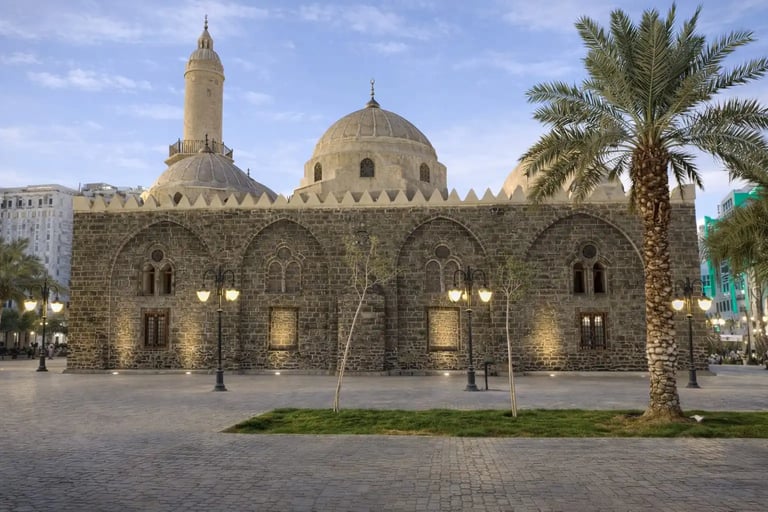
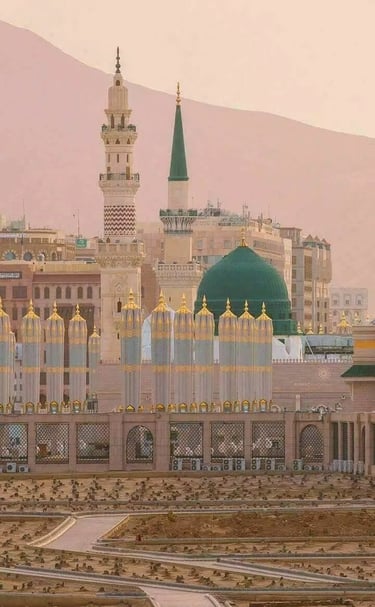
Near the Prophet’s Mosque, Masjid an-Nabawi, stands Masjid Al-Ghamama in Al-Madinah al-Munawwarah (Medina), Saudi Arabia, a historic place where the Prophet Muhammad, peace and blessings of Allah be upon him, performed the Eid prayer.
Masjid Al-Ghamāmah and the Eid prayer
In Al-Madinah al-Munawwarah, there is a historic site associated with the Eid prayer: Masjid Al-Ghamāmah, located not far from Al-Masjid an-Nabawi.
Historical accounts report that the Prophet Muḥammad, peace and blessings of Allah be upon him, used to perform the Eid prayer in an open prayer area (muṣallā) located at this place, allowing the entire community to gather widely for this collective prayer. The first Eid celebrations in the history of Islam date back to the year 2 AH, in Medina.
The name Al-Ghamāmah means “the cloud.” According to accounts transmitted by historians, a cloud appeared at this location during a supplication made by the Prophet Muḥammad, peace and blessings of Allah be upon him, and brought rain. This memory gave the place the name Masjid Al-Ghamāmah, the “Mosque of the Cloud.”
Originally, this location was simply the open-air prayer ground (muṣallā) where the Eid prayers were performed. The mosque was later built during the Umayyad period to mark this historic site, and it was renovated and restored at different periods throughout Islamic history.
Today, this place remains a historical reminder of the tradition of the earliest Eid prayers in Medina and of the public and communal dimension of this celebration in Islam.
🌎 Eid traditions around the world
Eid al-Fitr is celebrated in many countries and cultures. Although traditions may vary from region to region, the spirit of the celebration remains the same: gratitude, sharing, and brotherhood.
🇸🇦 Saudi Arabia: the street meal
In some traditional neighborhoods, after the Eid prayer, residents bring large carpets into the streets.
Each family brings a dish, often Kabsa or Jreesh, and everyone shares their meal with neighbors, passersby, and people in need.
This tradition reflects the spirit of brotherhood and solidarity of Eid.
Kabsa: a traditional Saudi dish made of spiced rice usually served with chicken, lamb, or beef.
Jreesh: a traditional Saudi dish made from crushed wheat slowly cooked with meat and spices.
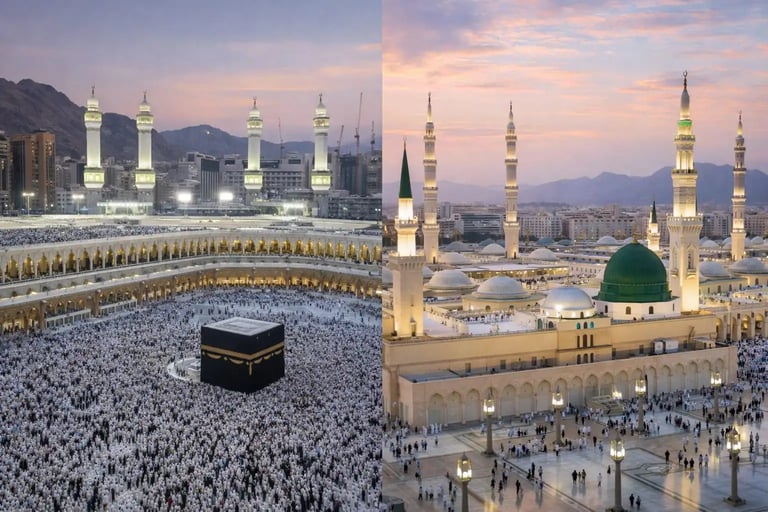
In Mecca and Al-Madinah al-Munawwarah (Medina), Saudi Arabia, stand the two holiest mosques in Islam: the Kaaba in the Sacred Mosque and Masjid an-Nabawi, the mosque of the Prophet Muḥammad, peace and blessings of Allah be upon him.
🇲🇻 Maldives: island traditions of Eid
In the Maldives, Eid is celebrated in an atmosphere that is both festive and traditional. One of the most iconic moments is Bodu Eid, a procession during which residents parade with impressive giant creations made from woven palm leaves, often representing fish or marine creatures.
A popular anecdote of Eid in the Maldives is the practice of Baibalaa, a spectacular traditional sport played on the sand. During this period, it is not uncommon to see local life and resort communities come together around the Eid celebrations.
Baibalaa: a traditional Maldivian sport played on sand, similar to rugby, where two teams compete in a physical game to reach the opponent’s line.
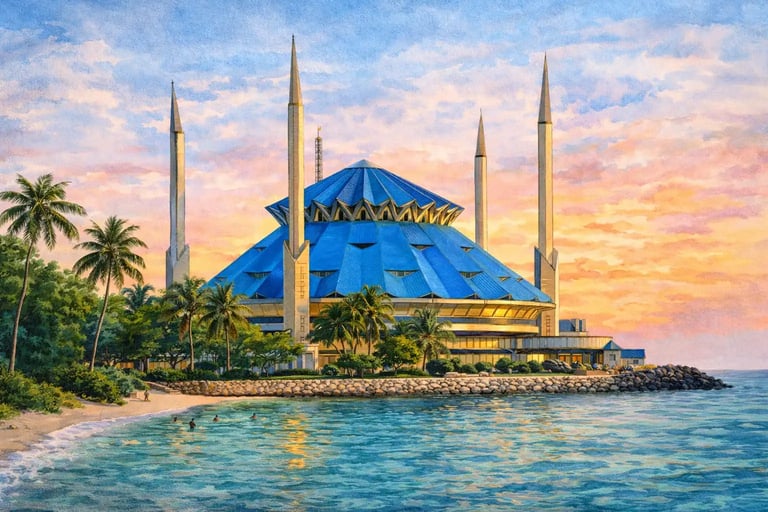
Grande mosquée King Salman à Malé aux Maldives, l’une des mosquées modernes les plus importantes de l’océan Indien.
🇳🇬 Nigeria: the Durbar parades
In some regions of Nigeria, particularly in historic northern cities such as Kano or Katsina, Eid is marked by a spectacular celebration called Durbar.
After the Eid prayer, horsemen dressed in richly decorated traditional costumes parade through the streets on their horses. These parades recall the ancient traditions of the Hausa kingdoms and often attract large crowds.
Over time, the Durbar has become a strong cultural symbol of Eid celebrations in Nigeria, blending history, tradition, and popular festivities.
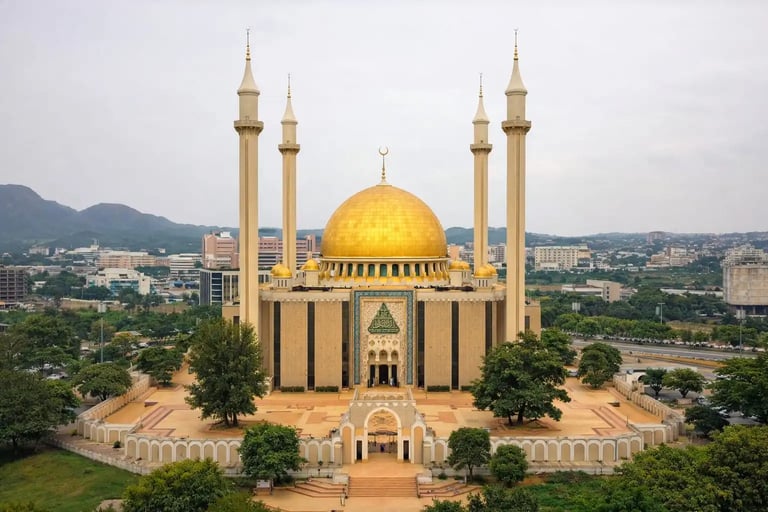
National Mosque of Abuja in Nigeria with its golden dome and tall minarets, a major religious center in West Africa
🇲🇦 Morocco: the festive attire and the children’s celebration
In Morocco, Eid is inseparable from the Djellaba or Jabador, elegant traditional garments that many people wear especially for this day. Even the most modern individuals often exchange their Western clothes for local craftsmanship, giving the streets a particularly festive atmosphere.
A commonly mentioned anecdote is that Eid al-Fitr is sometimes called “the children’s celebration.” Families give special attention to the youngest members, and parents make sure they wear their most beautiful clothes.
Little girls are often dressed in miniature caftans or elegant small djellabas, resembling the outfits worn by adults. They are sometimes allowed to carry a small handbag, wear a bit of kohl, or subtle makeup, which makes the day particularly special for them.
After the Eid prayer, families gather to share a breakfast composed of traditional pastries such as cornes de gazelle, accompanied by mint tea.
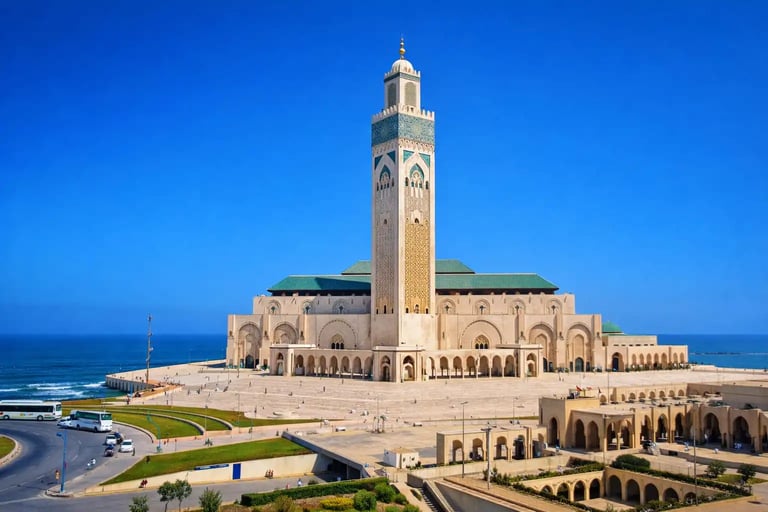
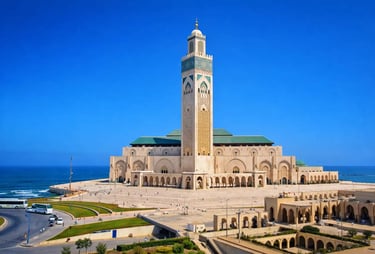
Hassan II Mosque – Casablanca. One of the largest mosques in the world, famous for its 210-meter minaret and its construction partially above the Atlantic Ocean.
🇸🇬 Singapore: the brilliance of Geylang Serai
In Singapore, Eid al-Fitr is called Hari Raya Puasa.
The historic district of Geylang Serai becomes the heart of the celebrations and transforms every year into a vast illuminated market several weeks before the festival.
An important tradition is asking forgiveness from elders by kissing their hand, a gesture known as Salam.
Families often wear the Baju Kurung, an elegant and colorful traditional outfit that is particularly popular during this celebration.
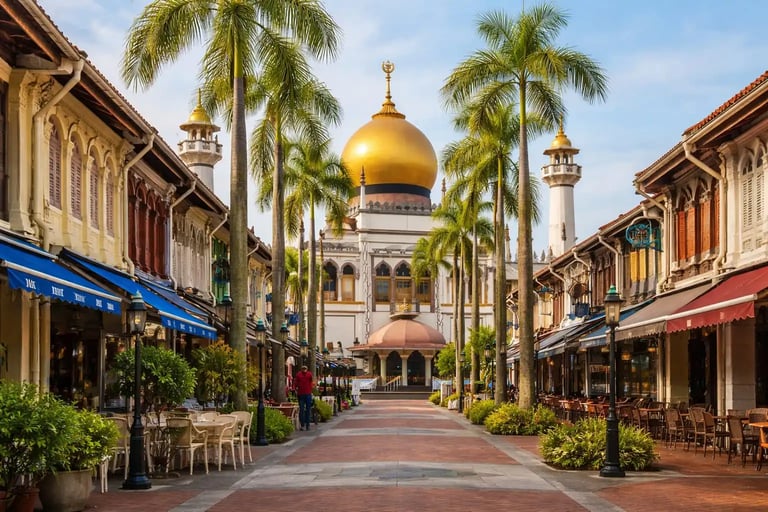
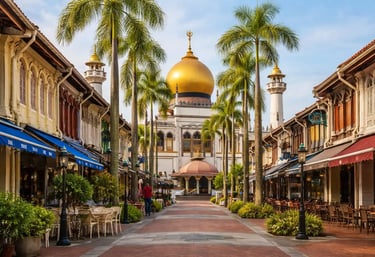
Sultan Mosque – Kampong Glam. The most emblematic mosque in Singapore, recognizable by its large golden dome.
🇹🇷 Turkey: Şeker Bayramı, the sugar festival
In Turkey, Eid al-Fitr is called Şeker Bayramı, the “Sugar Festival.”
Children visit members of their family and kiss the hands of their elders.
In return, they receive sweets, Turkish delight, or a small coin.
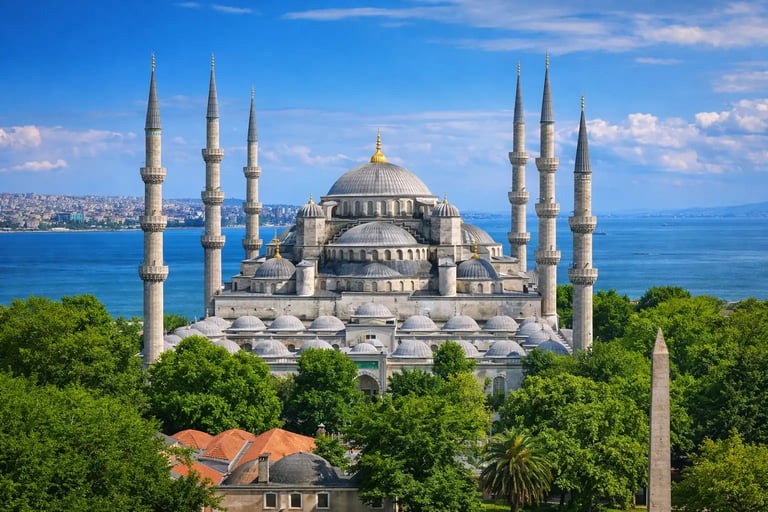
Sultan Ahmed Mosque (Blue Mosque) – Istanbul. Known for its six minarets and thousands of blue tiles, it is one of the most famous Islamic monuments in the world.
🇨🇭 Switzerland: the Alpine celebration
In Switzerland, the Muslim community is very diverse and includes families originating from Turkey, the Balkans, North Africa, and the Middle East.
The Eid prayer is often held in large rented venues such as exhibition centers or congress halls, for example Palexpo in Geneva.
After the prayer, when the weather allows it, some families organize large picnics along Lake Geneva, creating a unique atmosphere that combines Swiss organization with Eastern conviviality.
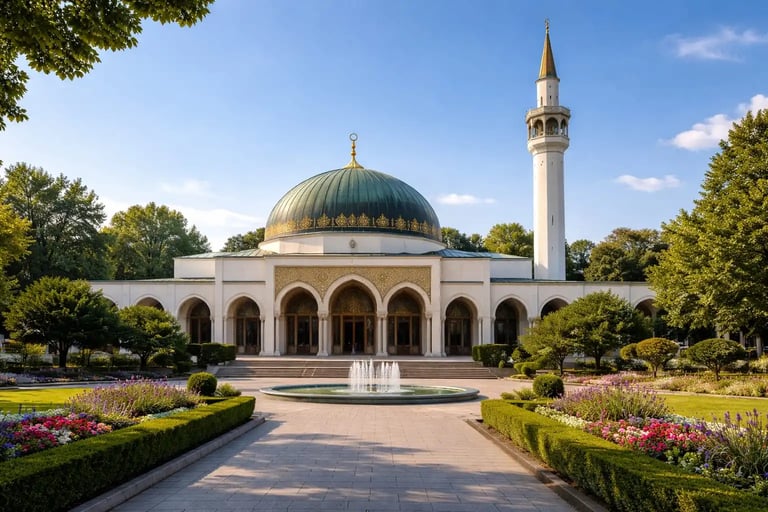
Grand Mosque of Geneva in Switzerland, Islamic center surrounded by trees and an important place of prayer for Muslims in Europe. The largest mosque in Switzerland, inaugurated in 1978, capable of welcoming around 1,500 worshippers.
🇮🇩 Indonesia: Mudik
In Indonesia, Eid is called Lebaran.
Tens of millions of people leave major cities to return to their hometowns.
This phenomenon, called Mudik, is considered the largest annual population movement in the world for a religious event.
Families often prepare Ketupat, rice cooked inside woven palm leaves.
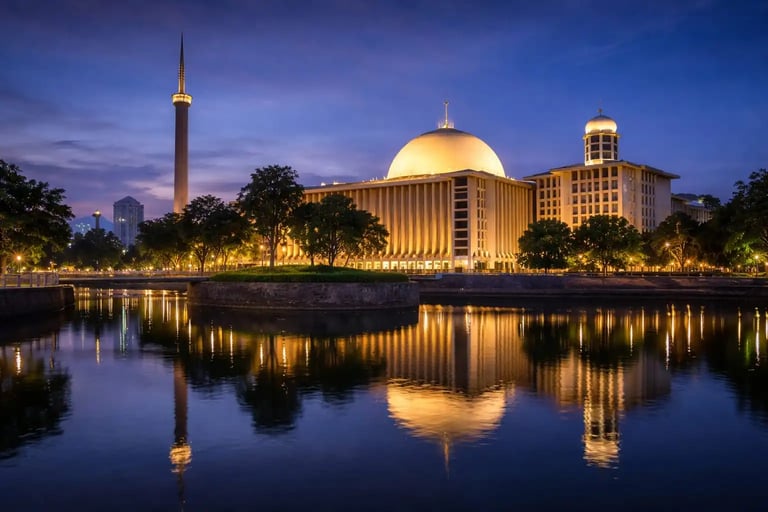
Istiqlal Mosque – Jakarta. Indonesia. The largest mosque in Southeast Asia and a symbol of Islam in the country that has the largest number of mosques in the world.
🇪🇸 Spain: the legacy of Al-Andalus
In Spain, particularly in Granada or Córdoba, Eid takes on a special historical dimension linked to the heritage of Al-Andalus.
Muslims sometimes gather in parks or gardens with views of historic monuments such as the Alhambra, recalling the ancient history of Islam in the Iberian Peninsula.
Traditional desserts are often shared, including Mussu, a sweet rice pudding popular during this period.
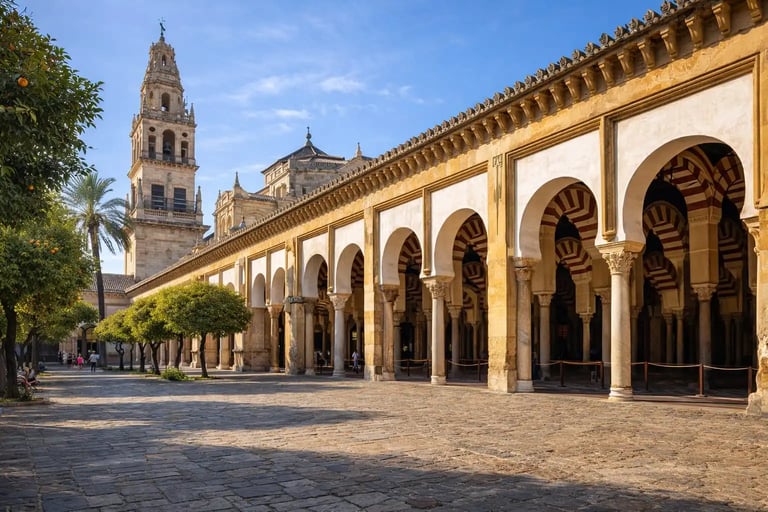
Great Mosque of Córdoba (Mezquita). Spain. A major historical monument of Al-Andalus, famous for its forest of red and white columns.
🇪🇬 Egypt: the salted fish tradition
In Egypt, a unique culinary tradition is eating Fessikh, a fermented and very salty fish.
This custom of eating dried fish dates back to the time of the Pharaohs, who already consumed it to celebrate the arrival of spring.
Today, Egyptians have preserved this ancestral dish to symbolically mark the end of Ramadan: after a month of sweet and gentle meals, this strong salty flavor creates a clear and festive contrast for Eid.
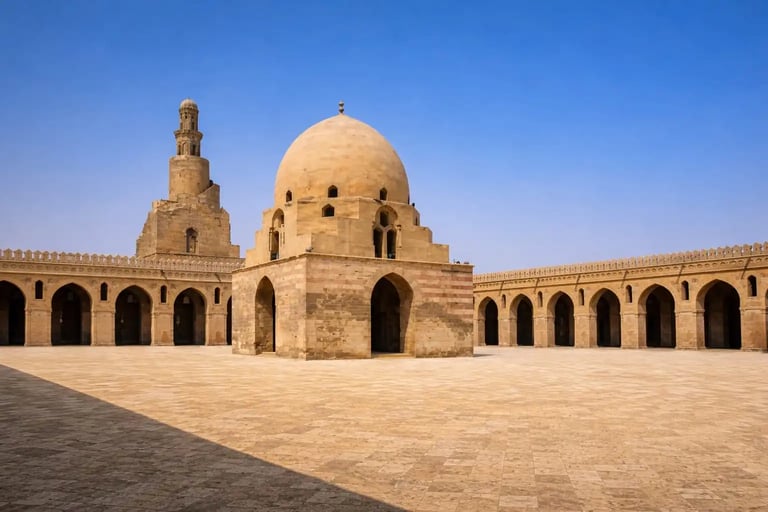
Ibn Tulun Mosque in Cairo, Egypt, a historic 9th-century mosque known for its Abbasid architectural style. One of the oldest mosques in Africa.
🇵🇹 Portugal: celebrations around the Lisbon mosque
In Portugal, the Central Mosque of Lisbon becomes the main center of Eid celebrations.
Cultural diversity is especially visible there: communities originating from Africa, particularly from Mozambique and Guinea-Bissau, bring their spicy culinary specialties, which mix with local pastries in a convivial atmosphere.
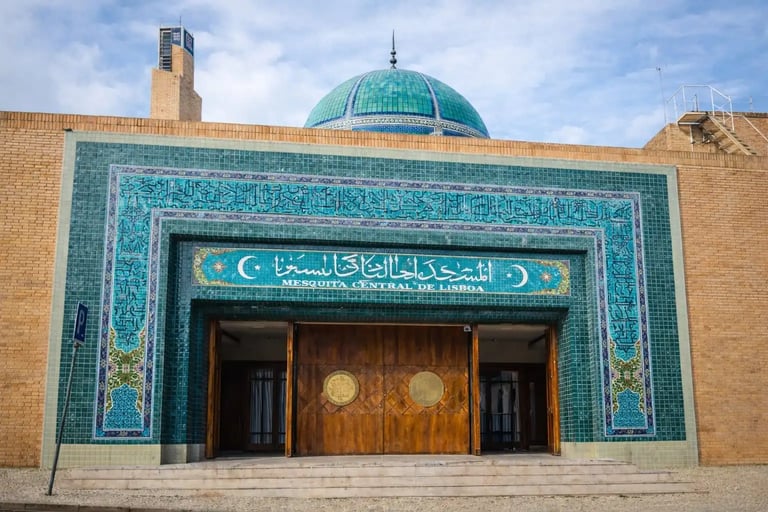
Central Mosque of Lisbon in Portugal, the main Muslim place of worship in the country with its turquoise dome and the center of Muslim life in the country.
🇨🇳 China: the Hui Muslim community
For Chinese Muslims, Eid is called Kaizhai Jie.
The day often begins with a visit to the cemetery to clean the graves of ancestors and recite prayers.
Families then gather for a large meal where noodles and beef dishes play an important role.
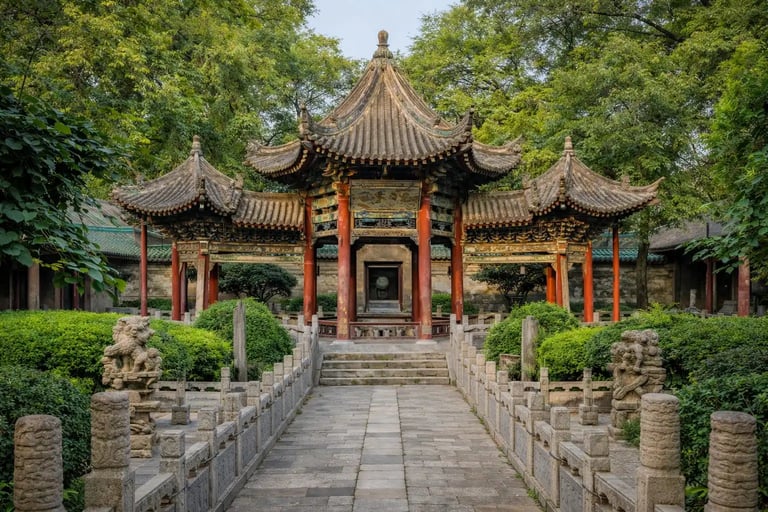
Great Mosque of Xi’an. A unique mosque combining traditional Chinese and Islamic architecture, founded more than a thousand years ago.
🇮🇳 India: the vermicelli celebration
In India, Eid al-Fitr is strongly associated with Sheer Khurma, a traditional dessert made with vermicelli, milk, dates, and dried fruits.
The night before Eid is called Chaand Raat, “the night of the moon.” Streets and markets remain open late into the night. Women apply mehndi (henna) and buy colorful glass bracelets to celebrate the arrival of the festival.
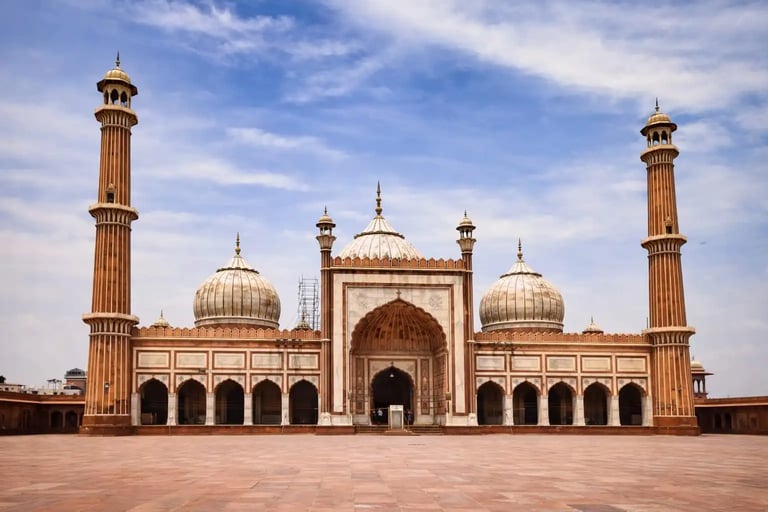
Jama Masjid – Delhi. One of the largest mosques in India, built under the Mughal emperor Shah Jahan.
🇵🇰 Pakistan: Eidi, the children’s gift
In Pakistan, one of the traditions most anticipated by children is Eidi.
After the Eid prayer, children visit members of their family and often receive a small amount of money given by parents, uncles, or grandparents.
This gesture symbolizes the generosity and joy of the celebration.
Families then gather around traditional meals and sweet desserts, and children often use their Eidi to buy toys or treats.
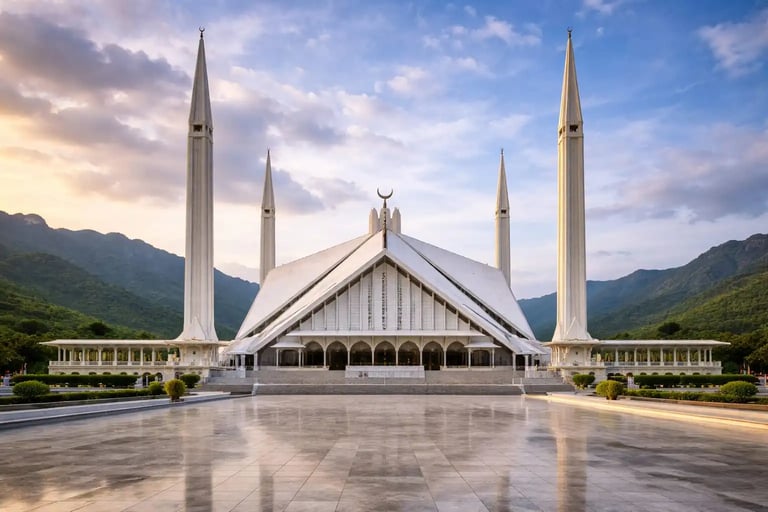
Faisal Mosque – Islamabad. An iconic mosque shaped like a Bedouin tent, surrounded by the Margalla Hills.
🇺🇸 United States: large Eid festivals
In the United States, since Eid is not a national public holiday, Muslim communities often organize large gatherings called Eid Festivals.
In some cities, entire parks or leisure venues are rented for the day.
After the Eid prayer, there are often children’s games, inflatable castles, halal food stalls, and ice cream trucks, creating a very family-friendly festive atmosphere.
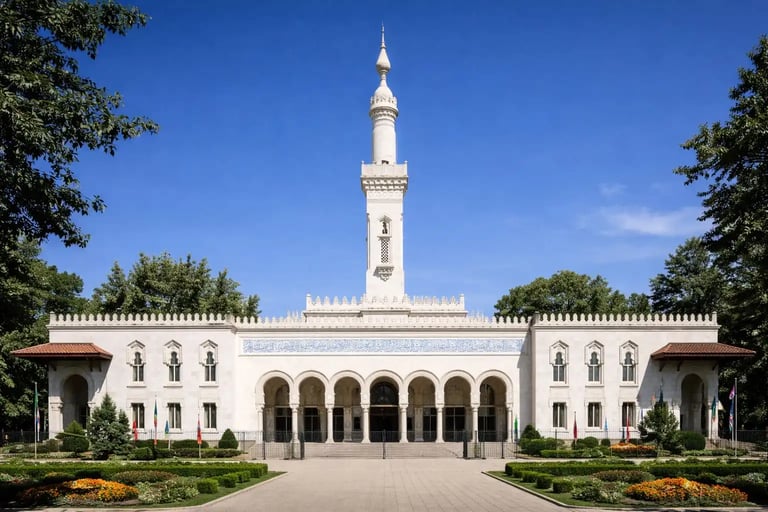
Islamic Center of Washington – Washington D.C. United States. One of the best-known mosques in North America.
🇦🇪 United Arab Emirates: the illuminated nights of Eid
In the United Arab Emirates, Eid is celebrated with large family gatherings and festive meals.
After the morning prayer, families visit each other and share traditional dishes.
In cities such as Dubai or Abu Dhabi, celebrations often continue in the evening with large fireworks displays organized in different parts of the city.
Shopping malls and waterfront promenades then become gathering places where families come together to enjoy the festive atmosphere.
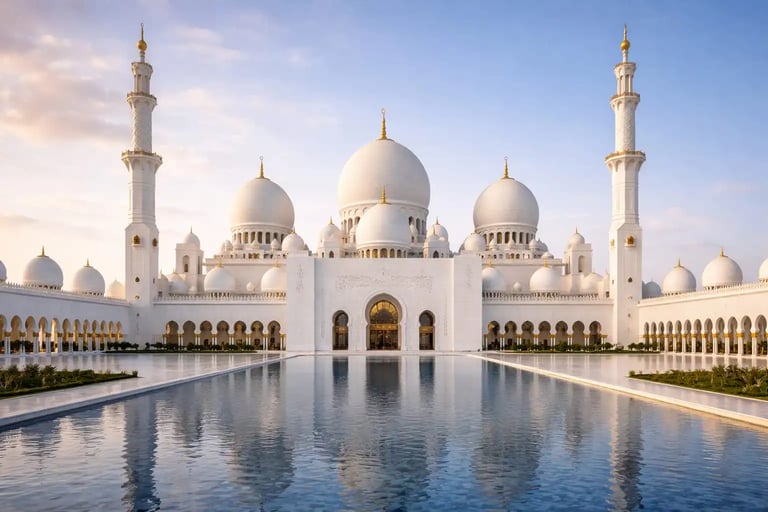
Sheikh Zayed Grand Mosque – Abu Dhabi .United Arab Emirates. One of the most spectacular mosques in the world, famous for its white marble and immense domes.
🇵🇸 Jerusalem: the devotion of Al-Aqsa Mosque
In Jerusalem, Eid al-Fitr is experienced with particular intensity around Al-Aqsa Mosque.
From the early hours of the morning, tens of thousands of worshippers gather on the Haram al-Sharif esplanade to perform the Eid prayer in an atmosphere of reflection and brotherhood.
After the prayer, the streets of the Old City come alive. It is not uncommon to hear the drums and bagpipes of Palestinian scouts marching through the narrow streets, a moment filled with pride and tradition.
Among the culinary traditions of Eid in Jerusalem, the famous Ka'ak al-Quds, an oval sesame-covered bread, is sold in front of the gates of the Old City. It is often eaten with zaatar or accompanied by eggs baked in wood-fired ovens.
The celebration is also a moment of joy for children. A very touching tradition: volunteers and parents often organize distributions of balloons and small toys directly on the esplanade after the prayer. The idea is to transform this place of tension into a vast playground so that children keep a joyful memory of Eid at Al-Aqsa.
Finally, some residents of Jerusalem have the custom of visiting the Bab al-Rahma cemetery, located near the sacred enclosure, to greet the deceased before joining their families and celebrating Eid together.
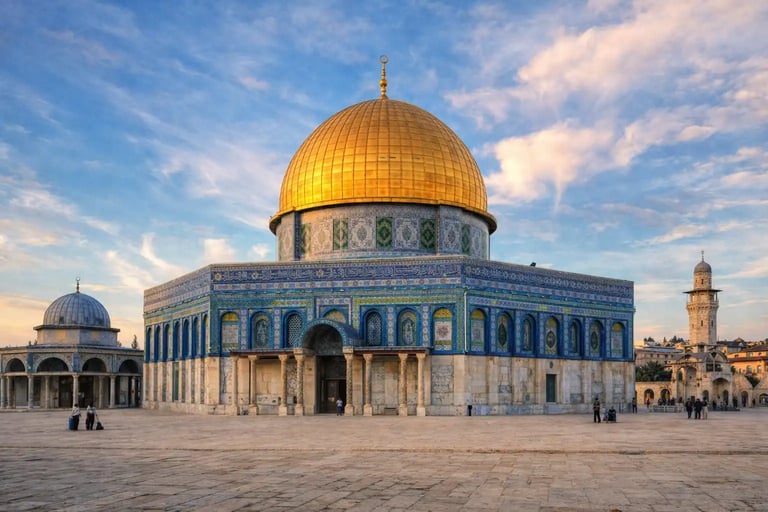
Al-Aqsa Mosque, located in the Old City of Jerusalem on the Haram al-Sharif esplanade, is the third holiest site in Islam after Mecca and Medina, where thousands of worshippers gather for the Eid al-Fitr prayer.
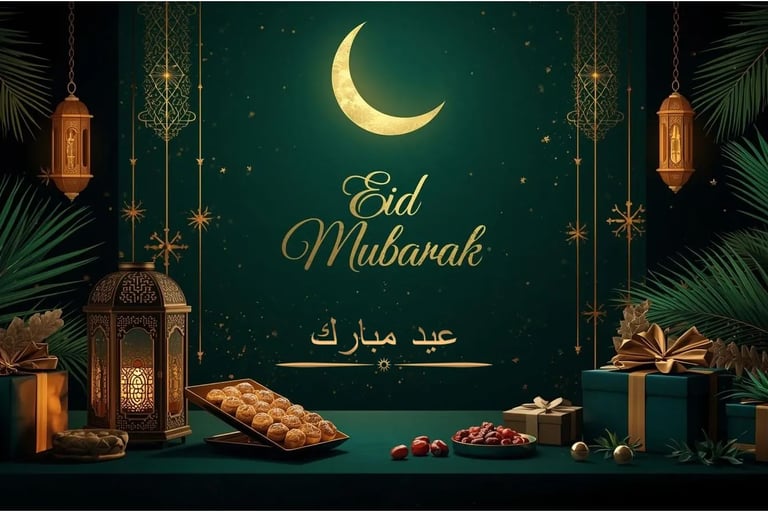
Eid al-Fitr marks the end of the month of Ramadan and is celebrated by Muslims around the world in a spirit of gratitude, sharing, and joy.
(Quick reminder) What to do on the day of Eid: how the day unfolds
The morning of Eid
The day begins with preparations for the prayer.
Muslims wake up early, perform ghusl, wear their best clothes, and apply perfume.
Before leaving for the prayer, it is recommended to eat a few dates in an odd number.
Muslims also begin reciting the takbīr.
The Eid prayer
Muslims then go to the Eid prayer in mosques or open-air prayer grounds.
The prayer is followed by a sermon (khutbah) in which the imam reminds the community of the importance of gratitude, generosity, and maintaining family ties.
After the prayer, Muslims greet one another and exchange good wishes.
Eid greetings
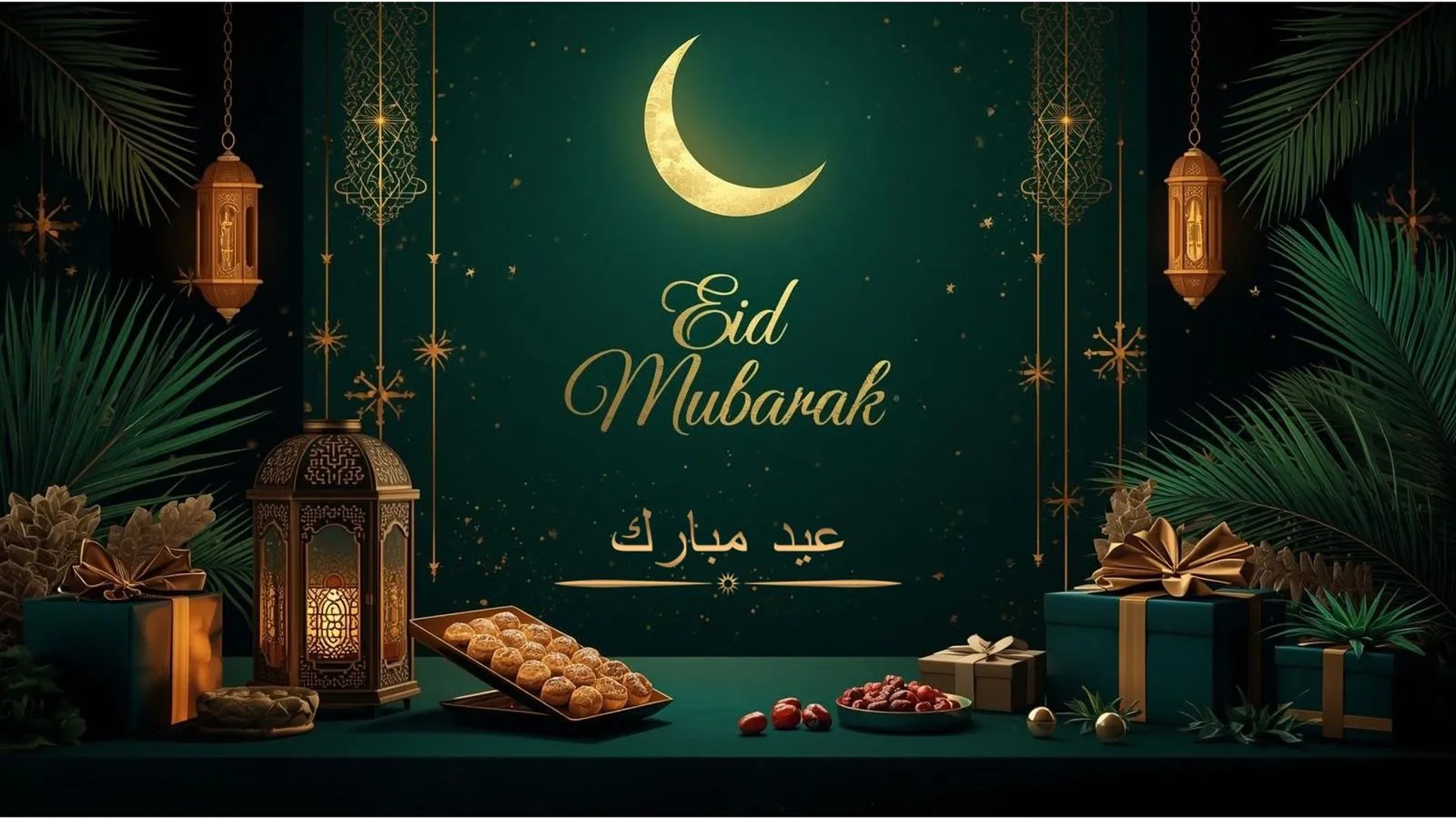
عيد مبارك
Eid Mubarak.
Or:
تقبل الله منا ومنكم
TaqabbalAllāhu minnā wa minkum.
“May Allah accept from us and from you.”
Family visits
After the prayer, many families gather to share a meal.
Relatives visit one another, exchange gifts, and spend time together.
Generosity and solidarity
The spirit of Eid is marked by generosity.
Muslims are encouraged to help people in need, share their meals, and spread joy around them.
Zakat al-Fitr
Zakat al-Fitr is an obligatory charity linked to the end of Ramadan.
It must be given before the Eid prayer so that those in need can also participate in the celebration.
This charity purifies the fast of Ramadan and helps support the most vulnerable.
Conclusion
Eid al-Fitr marks the end of the blessed month of Ramadan and is a moment of joy, gratitude, and brotherhood.
Muslims celebrate this day by thanking Allah, gathering with their loved ones, and sharing generosity with others.
May Allah accept the fasting, prayers, and good deeds of all believers.
Learn more
If this article helped you, feel free to explore our other resources:
📖 The Complete Guide to Ramadan 2026: schedules, health advice, spirituality, and everything you need to know to successfully observe the month of fasting.
🤝 Support Ashshahada: Do you appreciate our independent work? Help us continue offering high-quality guides and exclusive content.
Navigation Help
You can click on each image below to explore the different pages.
Say BismiLlāh and enjoy the journey.







The First Words
The forms of the Shahada
The index finger in the Shahada
The Shahada in the Qur’an
Entering Islam
The Shahada in Prayer
In the believer’s life
Sincerity of the Heart
Miracle
The supreme rank of the Shahada


The Forms of the Tashahhud in Prayer


Purification : Ablution


The Shahada in the Call to Prayer


Prayer
Time
Home
The Last Word

