




How to Perform the Prayer
(step-by-step guide)
🤍
1 Preparation
Being in a state of purification
Dressing modestly
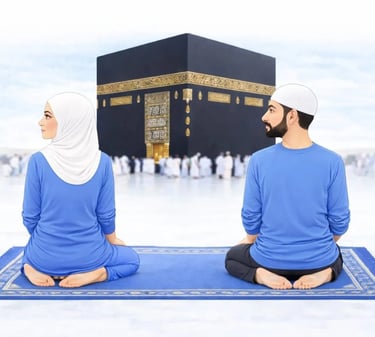
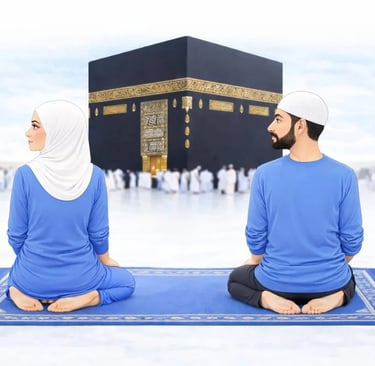
Facing the Qibla
Forming the intention in the heart
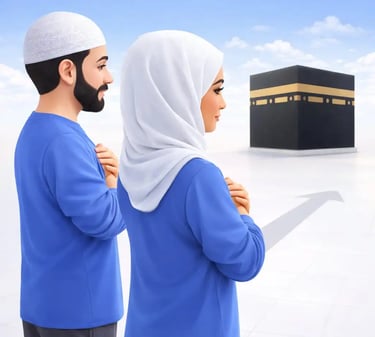
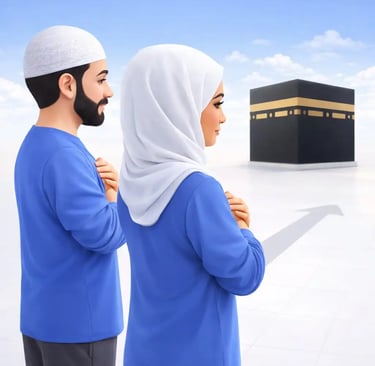
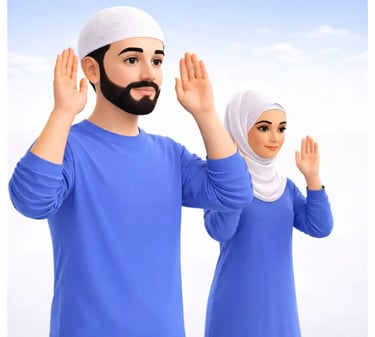
2 Beginning of the prayer (Takbīr)
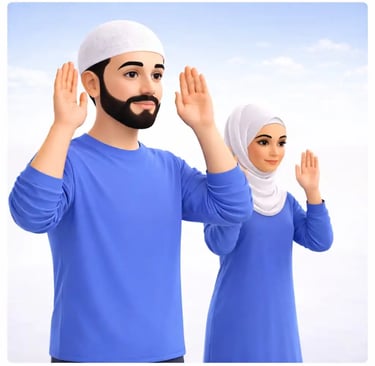
Raise your hands and say:
Allāhu Akbar
→ Allah is the Greatest
3 Standing position with recitation (Qiyam)
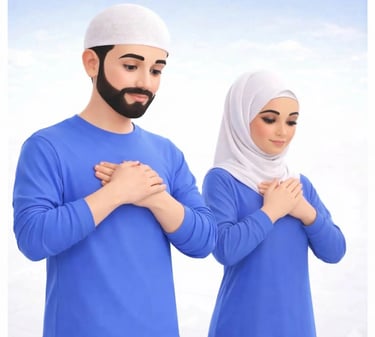
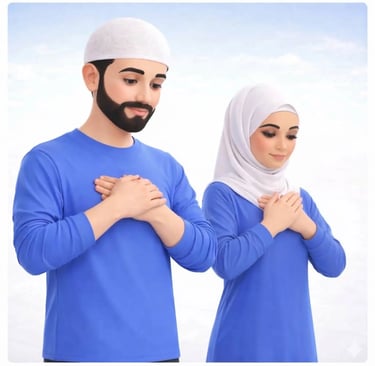
Hands placed on the chest
Recite Sūrat Al-Fātiḥa, say “Āmīn”, then recite another sūrah
Recitation during the prayer
Order of recitation :
1 : Sūrat Al-Fātiḥa
2 : Saying “Āmīn”
3 : Another sūrah (example: Sūrat Al-Ikhlāṣ)
1 Sūrat Al-Fātiḥa
In Arabic
بِسْمِ اللَّهِ الرَّحْمَٰنِ الرَّحِيمِ
الْحَمْدُ لِلَّهِ رَبِّ الْعَالَمِينَ
الرَّحْمَٰنِ الرَّحِيمِ
مَالِكِ يَوْمِ الدِّينِ
إِيَّاكَ نَعْبُدُ وَإِيَّاكَ نَسْتَعِينُ
اهْدِنَا الصِّرَاطَ الْمُسْتَقِيمَ
صِرَاطَ الَّذِينَ أَنْعَمْتَ عَلَيْهِمْ
غَيْرِ الْمَغْضُوبِ عَلَيْهِمْ
وَلَا الضَّالِّينَ
In phonetics
Bismi Llāhi r-raḥmāni r-raḥīm
Al-ḥamdu liLlāhi rabbi l-ʿālamīn
Ar-raḥmāni r-raḥīm
Māliki yawmi d-dīn
Iyyāka naʿbudu wa iyyāka nastaʿīn
Ihdinā ṣ-ṣirāṭa l-mustaqīm
Ṣirāṭa l-ladhīna anʿamta ʿalayhim
Ghayri l-maghḍūbi ʿalayhim
Wa lā ḍ-ḍāllīn
Translation of Sūrat Al-Fātiḥa
In the Name of Allah, the Most Merciful, the Most Compassionate.
All praise is due to Allah, Lord of all worlds.
The Most Merciful, the Most Compassionate.
Master of the Day of Judgment.
You alone we worship, and You alone we ask for help.
Guide us to the straight path,
the path of those upon whom You have bestowed favor,
not of those who have earned Your anger,
nor of those who have gone astray.
2 After Al-Fātiḥa, we say:
Āmīn
3. Another surah
For example
Sūrat Al-Ikhlāṣ
In Arabic
قُلْ هُوَ اللَّهُ أَحَدٌ
اللَّهُ الصَّمَدُ
لَمْ يَلِدْ وَلَمْ يُولَدْ
وَلَمْ يَكُنْ لَهُ كُفُوًا أَحَدٌ
In phonetics
Qul huwa Llāhu aḥad
Allāhu ṣ-ṣamad
Lam yalid wa lam yūlad
Wa lam yakun lahu kufuwan aḥa
Translation
Say: He is Allah, One.
Allah, the Self-Sufficient.
He neither begets nor is born.
And there is none comparable to Him.
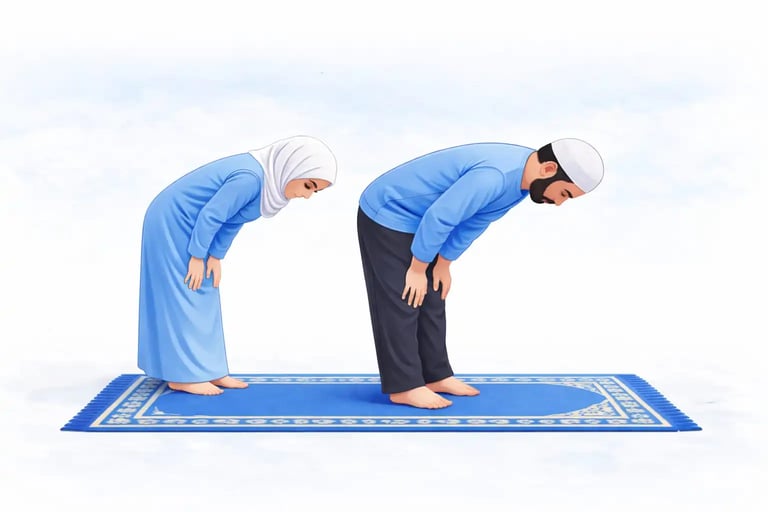
4 inclination (Rukūʿ)
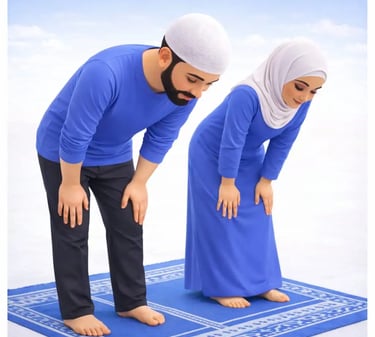
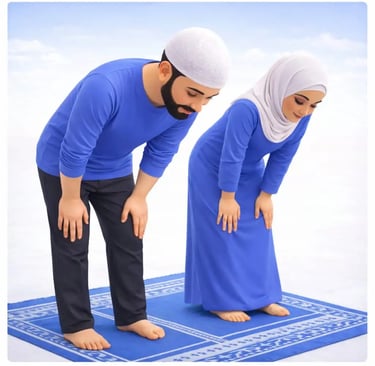
When going down :
Allāhu Akbar
→ Allah is the Greatest
Then :
Subḥāna Rabbiyal-ʿAẓīm
→ Glory be to my Lord, the Most Great
5 Standing up after bowing (Iʿtidāl)
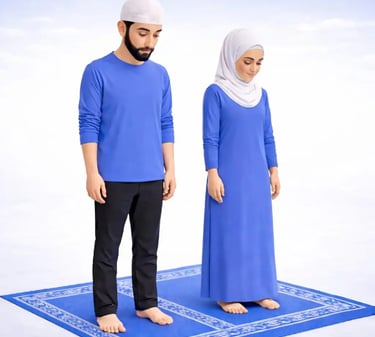
When rising :
Samiʿa Allāhu liman ḥamidah
→ Allah hears the one who praises Him
Then while standing :
Rabbanā wa laka al-ḥamd
→ Our Lord, and to You belongs all praise
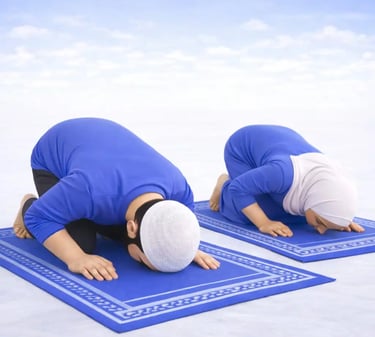
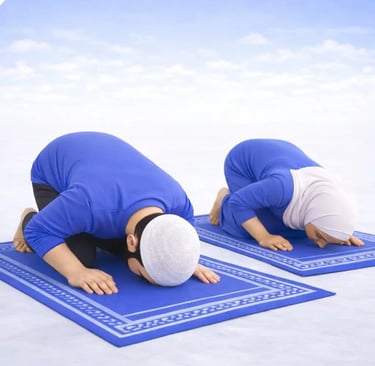
6 First prostration (Sujūd)
When going down :
Allāhu Akbar
→ Allah is the Greatest
Then :
Subḥāna Rabbiyal-Aʿlā
→ Glory be to my Lord, the Most High
This is the moment for supplication.
This is where forgiveness is sought.
This is where one speaks to Allah.
This is where one entrusts to Him what is in the heart.
Sitting between the two prostrations (Jalsa)
When rising say :
Allāhu Akbar
→ Allah is the Greatest
Then say :
Rabbi ighfir lī
→ My Lord, forgive me


8 Second prostration (Sujūd)
When going down again :
Allāhu Akbar
→ Allah is the Greatest
Then say :
Subḥāna Rabbiyal-Aʿlā
→ Glory be to my Lord, the Most High
Take this opportunity to make duʿāʾ again
This is where we ask for forgiveness
This is where we speak to Allah
This is where we confide in Him what is on our hearts
9 Final sitting (Tashahhud – Ibrāhīm greetings and Shahada)
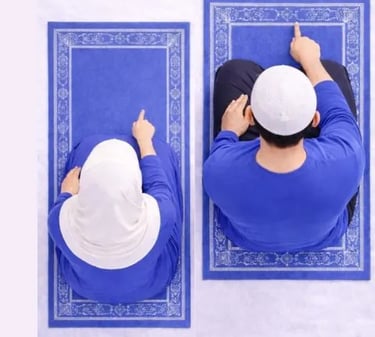
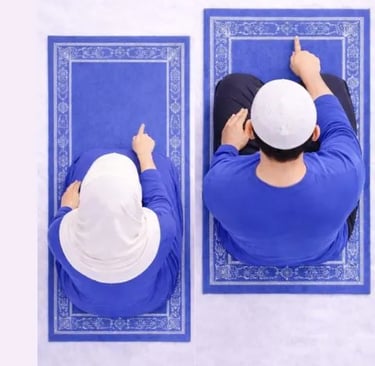
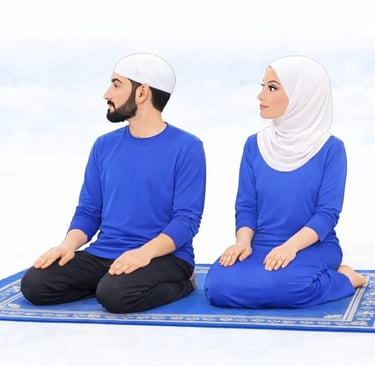
Sitting for the final sitting.
The left hand is placed on the left thigh.
The right hand is placed on the right thigh.
The right index finger is pointed forward, towards the Qibla.
It may be moved slightly, without exaggeration, in accordance with the reported Sunnah.
Recitation
At the end of the 2nd rak'ah:
If the prayer is 2 rak'ahs (Fajr): this is the final sitting.
1 Tashahhud
2 Shahada
3 Salutations upon the Prophet Muhammad, peace and blessings of Allah be upon him, and upon the family of Ibrahim.
4 Shahada
If the prayer is more than 2 rak'ahs: this is the first sitting.
1 Tashahhud
2 Shahada
Then one stands up to continue the prayer.
At the end of the prayer (final sitting):
1. Tashahhud
2. Shahada
3. Salutations upon the Prophet Muhammad, peace and blessings of Allah be upon him, and upon the family of Ibrahim
4. Shahada
The recitation:
1. Tashahhud
Arabic
ٱلتَّحِيَّاتُ لِلَّهِ وَٱلصَّلَوَاتُ وَٱلطَّيِّبَاتُ
ٱلسَّلَامُ عَلَيْكَ أَيُّهَا ٱلنَّبِيُّ وَرَحْمَةُ ٱللَّهِ وَبَرَكَاتُهُ
ٱلسَّلَامُ عَلَيْنَا وَعَلَىٰ عِبَادِ ٱللَّهِ ٱلصَّالِحِينَ
Phonetic
At-taḥiyyātu liLlāhi waṣ-ṣalawātu waṭ-ṭayyibāt
As-salāmu ʿalayka ayyuhan-nabiyyu wa raḥmatu Llāhi wa barakātuh
As-salāmu ʿalaynā wa ʿalā ʿibādi Llāhi ṣ-ṣāliḥīn
Translation
All greetings, prayers, and good deeds are for Allah.
Peace be upon you, O Prophet, and the mercy of Allah and His blessings.
Peace be upon us and upon the righteous servants of Allah.
2. Shahada
Arabic
أَشْهَدُ أَنْ لَا إِلَٰهَ إِلَّا ٱللَّهُ
وَحْدَهُ لَا شَرِيكَ لَهُ
وَأَشْهَدُ أَنَّ مُحَمَّدًا عَبْدُهُ وَرَسُولُهُ
Phonetic
Ash-hadu an lā ilāha illa Llāh
Waḥdahū lā sharīka lah
Wa ash-hadu anna Muḥammadan ʿabduhū wa rasūluh
Translation
I bear witness that there is no deity worthy of worship except Allah,
He alone, without partner,
and I bear witness that the Prophet Muhammad, peace and blessings of Allah be upon him, is His servant and His messenger.
3. Salutations upon the Prophet Muhammad, peace and blessings of Allah be upon him, and upon the family of Ibrahim
Arabic
ٱللَّهُمَّ صَلِّ عَلَىٰ مُحَمَّدٍ وَعَلَىٰ آلِ مُحَمَّدٍ
كَمَا صَلَّيْتَ عَلَىٰ إِبْرَاهِيمَ وَعَلَىٰ آلِ إِبْرَاهِيمَ
إِنَّكَ حَمِيدٌ مَجِيدٌ
ٱللَّهُمَّ بَارِكْ عَلَىٰ مُحَمَّدٍ وَعَلَىٰ آلِ مُحَمَّدٍ
كَمَا بَارَكْتَ عَلَىٰ إِبْرَاهِيمَ وَعَلَىٰ آلِ إِبْرَاهِيمَ
إِنَّكَ حَمِيدٌ مَجِيدٌ
Phonetic
Allāhumma ṣalli ʿalā Muḥammadin wa ʿalā āli Muḥammad
kamā ṣallayta ʿalā Ibrāhīma wa ʿalā āli Ibrāhīm
innaka ḥamīdun majīd
Allāhumma bārik ʿalā Muḥammadin wa ʿalā āli Muḥammad
kamā bārakta ʿalā Ibrāhīma wa ʿalā āli Ibrāhīm
innaka ḥamīdun majīd
Translation
O Allah, bestow Your blessings upon the Prophet Muhammad and the family of Muhammad,
as You bestowed Your blessings upon Abraham and the family of Abraham.
Indeed, You are Praiseworthy and Glorious.
O Allah, bless the Prophet Muhammad and the family of Muhammad,
as You blessed Abraham and the family of Abraham.
Indeed, You are Praiseworthy and Glorious.
4 Shahada
Arabic
أَشْهَدُ أَنْ لَا إِلَٰهَ إِلَّا ٱللَّهُ
وَحْدَهُ لَا شَرِيكَ لَهُ
وَأَشْهَدُ أَنَّ مُحَمَّدًا عَبْدُهُ وَرَسُولُهُ
Phonetic
Ash-hadu an lā ilāha illa Llāh
Waḥdahū lā sharīka lah
Wa ash-hadu anna Muḥammadan ʿabduhū wa rasūluh
Translation
I bear witness that there is no deity worthy of worship except Allah,
He alone, without partner,
and I bear witness that the Prophet Muhammad, peace and blessings of Allah be upon him, is His servant and His messenger.
To learn, hear, and understand this text,
visit the page:
10 Final salutation (Salām)
Turn your head to the right,
Say:
As-salāmu ʿalaykum wa raḥmatullāh
→ May the peace and mercy of Allah be upon you
then turn your head to the left
Say:
As-salāmu ʿalaykum wa raḥmatullāh
→ May the peace and mercy of Allah be upon you

What is a rak'ah?
Simple definition
A rak'ah is a complete unit of prayer.
It consists of:
Standing (recitation)
Bowling
Standing up
Prostration
Sitting
Second prostration
All of this = 1 rak'ah
Then we repeat the sequence of prayers.
How many rak'ahs are there in a prayer?
Obligatory (fard)
Fajr (dawn) → 2 rak'ahs
Dhuhr (noon) → 4 rak'ahs
Asr (afternoon) → 4 rak'ahs
Maghrib (sunset) → 3 rak'ahs
Isha (night) → 4 rak'ahs
🟢 Very easy reminder
2 – 4 – 4 – 3 – 4
Fajr – Dhuhr – Asr – Maghrib – Isha
🤍 A reassuring little reminder
Learn gradually
Even if you hesitate, keep going
Allah looks at sincerity more than perfection